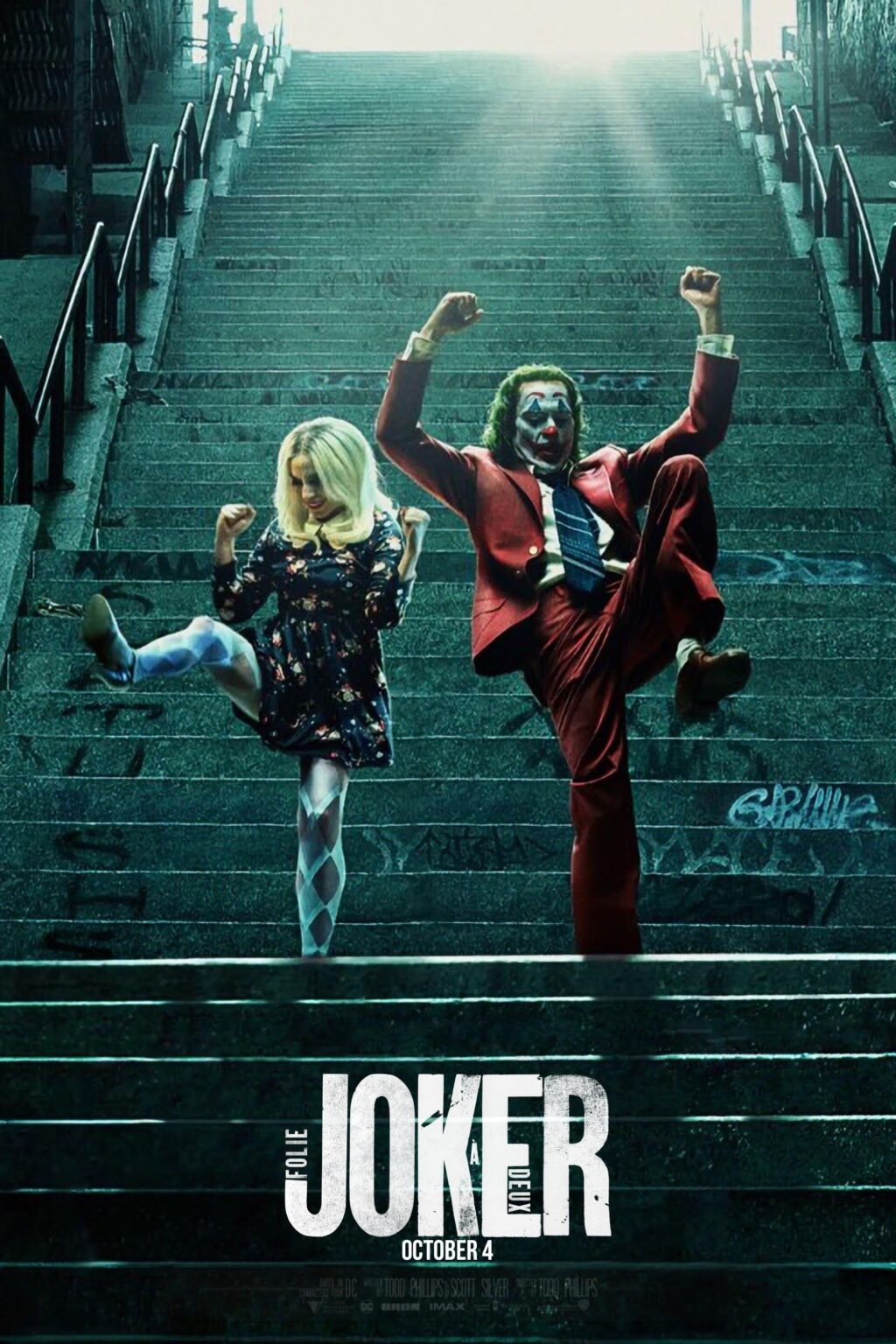

Oh great, another person dogging on this movie eh? I would posit you don’t quite know where I am going in this particular case. I think at this point I have actually read every negative thing I could possibly read about this film, and I think the true meaning is lost on so many people who just either don’t have time to think about what is going on in it, or just truly don’t want to put that much thought into their ‘comic book movie’. This is another in a line of films adapted from comic book characters that are trying to do something more. Did it do well? Did it fail? I think it depends on how you look at it. And I think if I break it down to a few different parts we might be able to find common ground where it failed, and where it succeeded. So please enjoy a rather long read. Feel free to take it in sections, and as always feel free to disagree with me if you like. I love to read other people’s interpretations as well. Understand I will not hit on every single point that you can possibly think of, but I am hitting on what I think are the major points or types of movies this could be thought of as, and want to explore those things specifically.
And before you read please see this in all caps, and with bold italicized words:
— SPOILERS OBVIOUSLY AHEAD —
I will do my best to not spoil every single thing in this film, and I very much do suggest you see this as I think the conclusion I reach will make the most sense after it is seen, but yes — SPOILERS ARE IN THIS.
Part I: The Comic Book Movie
Some folks believe that you can only do a comic book movie in one direct way: Characters named certain things or if certain characters are together in a movie, they must act in a certain way. Moving outside of the ‘mean’, meaning the average of how that character(s) show up in media that came before, causes the characters to be either misunderstood, ignored, or potentially outright rejected.
At this point we have more movies that conform to an established canon, or have established a canon unto themselves that we consider this to be the kinda the basic understanding of what a ‘comic book’ movie has to be to be accepted. We need characters that act out a certain story line, or combine several plot points together with their certain character motivations to create a story that is both familiar, but has a bit of a dramatic flare to create a potential of a handful of surprises that still do not come outside of the accepted mean of the media.
Some of the best comic book movies we have (and for this I think I will just stick to ones that made the most money..) ever had come out so far like: The Avengers (original, Age of Ultron, Infinity War / Endgame), Deadpool, Captain America, etc; I think you get the idea, but these movies have some specific things in common with one another, and no I don’t mean because they are all Marvel. They took characters that were already well understood by people world over, and then turned their stories that people may have only known partially and then made them into a coherent set of scenes that people could follow and easily digest. The last part I think being the most important aspect of a comic book movie: people can follow the stories, and they are easy to understand.
Each time we have so far had a comic book movie that has come out that was not about characters people already cared about, had an easy to understand and built story, and was simple to digest, it was critically and monetarily a failure. Some of the biggest “flops” in this sense would be the main movie of what this review is about, The Eternals, Justice League, The Marvels just to name a few. These films most of the time suffered from the same issues: Characters that were not well written to make them palatable, stories that were convoluted, and they didn’t build on already established or well understood lore.
“But Justice League was just about the basic folks like Batman and all.. how was that hard to understand?,” I hear coming at me in the comments before you keep reading. Remember that the best of the comic book movies that we have had before now done by Marvel built upon each other, and made the jump to a story that people could easily follow and had a plot that people were mostly familiar with. Justice League almost had most of these, but failed at building villains people cared about understanding their motivations for, and made the characters almost caricatures of themselves. Some of these faults even continuing into other films that they tried to make following it (Please see The Flash.)
“Okay okay Phil, but what about the first Joker movie, and why was that commercially successful and this movie wasn’t when it was also a comic book movie and was the same series and all?” Well it was successful because it made a known character act like a known character. He was psychotic we could tell quite quickly in the story (check in the box for the character of the Joker if I’ve ever known it.) He was unpredictable (another definite Joker quality there.) His mental state, and what we could and couldn’t take at face value was up in the air so the story continued to vault to madness in just such a way that the average person could follow it without any extra help. It also introduced little nuggets of character things that would tie it into the Batman mythos later. Specifically when you do things like this in a comic book movie you have hooks for those who may not know everything. The story lead down a path and the audience was able to accept that just because there wasn’t a hero to stop him at this time this person embodied enough of what we thought was the Joker that anything that subverted our expectations were features of the feature instead of something that made us question why we were in our seats.
Okay if that is the case, why does the second movie not do this well? Because instead of an unreliable narrator, a story that could be feasible to watch a man have that one absolutely terrible day that pushes him over the edge (ala Taxi Driver with the excellent Robert De Niro) and into madness, we were already in the Asylum. Without the extra cast of characters that came from average comic readers or fans of other Batman media would expect from there as well the place didn’t feel like what was what was expected. We got a more real take on the guards being terrible to the people inside of the facility, and the staff who truly were trying to make a difference in their patients lives. The dichotomy was stark, but the comic book mean was not set up from there. We got a court room drama, a jukebox musical, and finally mixed in with the interpersonal relationship between Arthur and Harley. While I think you could make a case that both of them were definitely within the average of how those characters would be it didn’t help make the expected reaction of having these two on screen work. We are expecting the scenes from Birds of Prey (and the Fantabulous Emancipation of One Harley Quinn) or The Suicide Squad showing Harley and Joker doing what they ‘do best’. This expectation verses the reality gets at the heart of why as a comic book movie this movie didn’t meet the mark people were expecting for it.
What does all of this finally equate to? It means as a comic book movie it failed. It was not what people were able to easily follow, and honestly anything without a reliable narrator already starts to become more work to separate fact from fiction from, and it did not follow the expected mean of the characters and what they would do together. Does that mean it shouldn’t have been a “Joker” movie? Maybe it would have done better then, but to be honest I think it was a great exploration into the character before full madness, yes even with the ending. The fact that the Joker has been done similarly in the Harley Quinn show on MAX, and to great acclaim, we can have a Joker that isn’t always just the most insane, and off the wall lunatic that we have been given to seeing him as in most of the media. He can truly be a force, but a force for change as needed in each situation. But as an average watcher going to see a comic book movie: This was a failed attempt.
Part II: The Jukebox Musical
When you look at the form of this movie from the stand point of what we call the ‘Jukebox Musical’ what does that mean for you? The most famous of these I think we can agree would be stuff like: Motown, Mamma Mia!, Moulin Rouge!, and maybe stuff like Rock of Ages(A quick note EDIT — I did look it up and this is considered one, color me informed!). What does that term mean, and why does it apply to Joker 2(just so I can keep the name shorter), and how does it stack up when we use this as a lens to view it?
This movie starts out with what we are expecting to be more talking and relating to the character as the last movie had been about. Quickly though, we turn to the inner turmoil that is made not just plain, but justified and expanded upon in music. What sets the idea of a jukebox musical apart from all other types of musicals? It is the use of popular music; be it just modern, a specific time period, or a hodgepodge of different flairs and styles as it plays through the story instead of using only original music made for that particular screen/play. The movie starts to blend both the real and the imaginary between both Lee and Arthur’s relationship with music being the conduit that changes the real verses the unreal.
These moments split the real life talking of court, and being in Arkham, to Arthur’s need to assert control over his own life. While I completely understand wanting to also tap into the well that is the absolutely more than capable Lady Gaga (who has been nominated for multiple Oscars, and even won one for her original song for her other work in A Star is Born, and has 13 Grammy awards for her talent in her music career), if we are functioning with the mentality that this is a jukebox musical we start losing folks from that train as soon as we deviate from it. We can’t seem to pick a lane as the movie goes to choose which way Arthur will take control. The finality of the movie in the courtroom is Arthur trying to merge the conscious nature of both the Joker personalities and his own base frailty. This isn’t told in song. It is told in a cold and rational truth to the jury that ends.. with a (un)predictable Joker flare of a “BANG”.
With choices like this littered through the film it is hard to tell if the point of the music was just to fill airtime, to bring in Lady Gaga for more star power (though to be fair I don’t see the point with how amazing Phoenix is as Arthur Fleck), or perhaps some other point I cannot quite put my finger on. Most of the best jukebox musicals don’t just use music to convey what is going on in scenes, but to explain motivations and story beats all in once for the characters growth and change. Joker 2 doesn’t take this concept and run with it. It takes the concept of what it could be in the jukebox musical sense, and decides that isn’t ‘good’ enough for its audience. The lacking of cohesion here makes me worried that the movie cannot decide what type of movie it wants to be, and the genre choices that it says it is don’t pan out to being what is really going on. With the fact that we cannot seem to keep the development of characters and motivations throughout the film into the songs that are suppose to be functioning medium to keep the story progressing I feel like we cannot say this movie succeeds in its want to be a jukebox musical either, at least in the known or preconceived style that is a jukebox musical as it is understood usually. I am not saying that these cannot have parts that aren’t to music or something, but the major reflective points for Arthur and other characters come without music. It comes with just the characters talking. The music is just an afterthought or just to break up the constant depression dripping through the style of story that is being told.
Part III: The Psychological Thriller/Drama
From the first time that we see Joaquin Phoenix’s Arthur Fleck view Lady Gaga’s character Lee in a room of people singing, we can tell there is quite a bit of different energy being thrown into the meeting between them. This starts to surface in our unreliable narrator’s head as time passes in which he plays out his fantasies of the idyllic life. He, in his full look as Joker, and her being the love of his life. The narcissistic character creation evident for the Joker personality becoming the dominate waxes and wanes much like the rest of Arthur’s trek through the psyche that has become what we were expecting more of after the first movie’s phenomenal styling and story. With that being said, though, does this film follow a path of being seen as a psychological thriller or drama? Can we reliably get drama from a movie that more than half way takes place inside of the broken psyche of a person we know to not be trustworthy by nature?
In the lens of a psychological thriller, most movie goers are treated to a character dissection that brings the ‘main’ character from the safe and secure basic life to that of a broken, scared, and fearful protagonist that doesn’t quite know how to interact with what is now their new ‘norm’. The antagonist in these films is following the protagonist by ‘chasing them up the tree’, and ‘chasing them down’ at the same time. Not allowing the character to build a new safe, or a new baseline is what really sets them apart until the ‘hero’ moment or to say the moment that the person takes the power back for themselves to punish or beat the antagonist in their own game (or some variation of the trope.) This rebuilds the character in the end either psychologically scarred, as bad as the antagonist or a copy cat of the antagonist, or into a new level of a more vigilant and ‘heroic’ character. In this way, I believe, we finally get the best way to describe Joker 2 in what is presented on screen.
In the subversion to some of the tropes that come with psychological thrillers our primary protagonist and our primary antagonist end up being one in the same (ala Fight Club) in Arthur and the Joker, and the secondary antagonist, Lee, push Arthur to confront that undercurrent that has been laying inside of him his entire life. This ‘monster’ was released during times of heightened stress in the first movie, but in the second outing everyone knows the monster. Now it is the case that our secondary antagonist is trying to draw it out but with a different medium. Using the attachment she creates for Joker specifically, it gives Arthur the push he needed to embrace the personality of the Joker fully. “But if its a personality, how does that make it also an antagonist?,” I can hear the questions already, but like in Fight Club and the idea of a multiple personalities from Dissociative Identity Disorder (DID after this if I need to reference it again), a case could be made that Arthur suffers from but I don’t think it explains his actual issue really.
After considering it for a much longer time I believe the better way instead of DID to describe the Joker character that is being portrayed would be akin to Dexter‘s “Dark Passenger.” In Dexter, the title character named Dexter Morgan has (depending on the book or tv show mind you) a thing he calls the “Dark Passenger” that makes him enact his twisted form of justice on the world and even gets almost hungry for him to act when it has been awhile (in the book it is akin to an actual supernatural entity or demon that even his adopted children have been ‘corrupted’ by.) Similarly for Arthur this aspect, when Arthur gets pushed, and the part of him that will fight back and is fighting back becomes who he is at the time. His mind, while disturbed, still comes up with a defense mechanism to be something greater than himself. This plays out in his grab for control in the construct of his own mind where he has the music with the different things happening between Lee and himself, the times that he murdered separate people who wronged him in the first film, and the acceptance of both the Joker and him being one in the same during the end of the trial that is part of the second film. This is where it borders between more drama than thriller to me and why I think there is a lot in common with both types of genre here. You can separate sometimes where he has more traditional thriller aspects from the first film where he is planning on how to skirt the rules, or how he will work with folks that are around him and then drama because of the trial and inner personal relationships that are either manipulating him (like when Lee had lied to him to get close to him, but seems to be telling the truth about what she has planned for the two of them) or he is manipulating and using them for his own gain.
Arthur comes around in the end to accepting the fact that his character is the problem, but, also admits to himself that the Joker itself has to be simply a role he was meant to play at the time of his life. I actually appreciate the meta analysis of this for the multiple layers that works on. The question though then comes down to: Does it actually fit into the narrative structure, and markings of a Psychological Thriller or Psychological Drama? I would posit that it fits closer to the drama side of things, but even with that distinction I think it comes up quite short. It doesn’t have the real trappings to do anything for the ‘thriller’ proposition this time around unlike the first movie where trying to figure out what was going to happen next, or what was real and wasn’t, be simply a toss of the dice compared to this movie where there is the clear delineation of what was real (The courtroom and Arkham facility), and what was fantasy (the musical numbers.) While it does try to do the trappings of these, I think it finds itself lacking here as well. It is definitely the most clear cut of the three types of movies I’ve gone over so far that it has connections to, but, and most importantly why it doesn’t work for the average movie goer is because of the mishmash of the different genres together instead of just one or another.
Part IV: So… what is it then? And does it work?
Simply put as I just finished in the last section; this film is a mishmash. There is no one thing that it does excellent or at the top of its game.
BUT
It is still a great film. It has elements of genres I actually despise (jukebox musicals) normally, elements of a genre that I see every film of and disagree with the basic elements that have to be there (comic book movies), and excels at showing the brokenness of a person’s psyche while fulfilling certain types of a genre that I didn’t think could coexist with the other two in one film (Psychological thriller/drama.. but mostly the drama part.) Why does trying to put it in one category make people hate it for that category? Because it bucks against the traditional roles and traditional storytelling beats of each of those genres by themselves.
This movie is more akin to the art film that a first time director who had ‘a vision’ really wanted to make to see if they could, and instead of having almost no budget it had practically an unlimited budget and the ability to draw on characters and themes most would only dream of doing. The problem with the film and also its greatest strength is the fact that it does not actually conform to that which is expected. It conforms to itself, and conforms to the character study that is at the heart of the picture. The Joker is an extremely flawed, understood only through the lens of his insanity, villainous and worthy character to spend time delving the absolute depths of his shattered psychological and in this particular styled Joker physiological way of handling his place in the world. The melding of Arthur and the persona of the Joker becoming one in the same and accepted by the only person of the movie that actually cares in the end if he is, Arthur himself, become the stage of a film that builds itself out of broken pieces. While there are places that the film could be changed, probably, to make it more palatable to the average movie watcher — I posit to you that this film’s biggest flaw was that it was advertised wrong, and the audience that it was going to draw was never going to enjoy it for what it really was trying to accomplish. When this film hits digital soon (I believe October 27th) it will find an absolute breadth of new and excited patrons that would not pay to see it on the big screen but who will happily appreciate what it is with the ability to take their time and digest it instead of sitting for two hours expecting only one type of thing and getting multiple others.
But again, this is my opinion. The film itself is a deep piece of work that when it is initially viewed will leave most feeling it is lacking. It is only in the continued grappling of what it is trying to convey does the audience grow with the film and to what, personally, I believe the director and Joaquin Phoenix were trying to accomplish. This type of thing also applies to many other pieces of media over the years that vexed many folks who never truly ‘got it’. Pretentious to say, or not, there are people who want to simply relax and enjoy the spectacle of what they are watching — those people deserve respect and movies to enjoy as well, but much like one of my favorite anime’s Neon Genesis Evangelion (along with the tetralogy of sequels), this is like glass of a heavy red wine: something to sip, and ponder the flavors of instead of simply a shot of whatever is cheap to relax with.
And with that I bid you adieu today. This got to be a much more involved and to be honest much longer review than I expected to make, but I think it still came out quite well. I will be back soon with more, until then
Thanks for reading, IPOY too.
-Phil




 The "Open" Blog
Leave a reply to Poppy Cancel reply